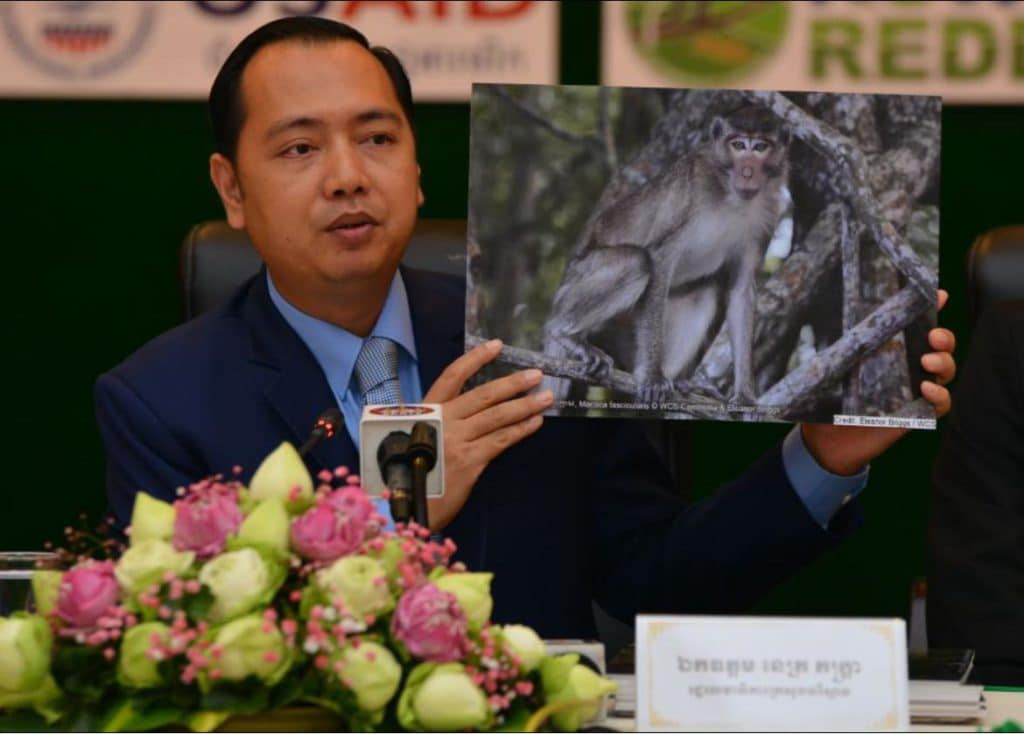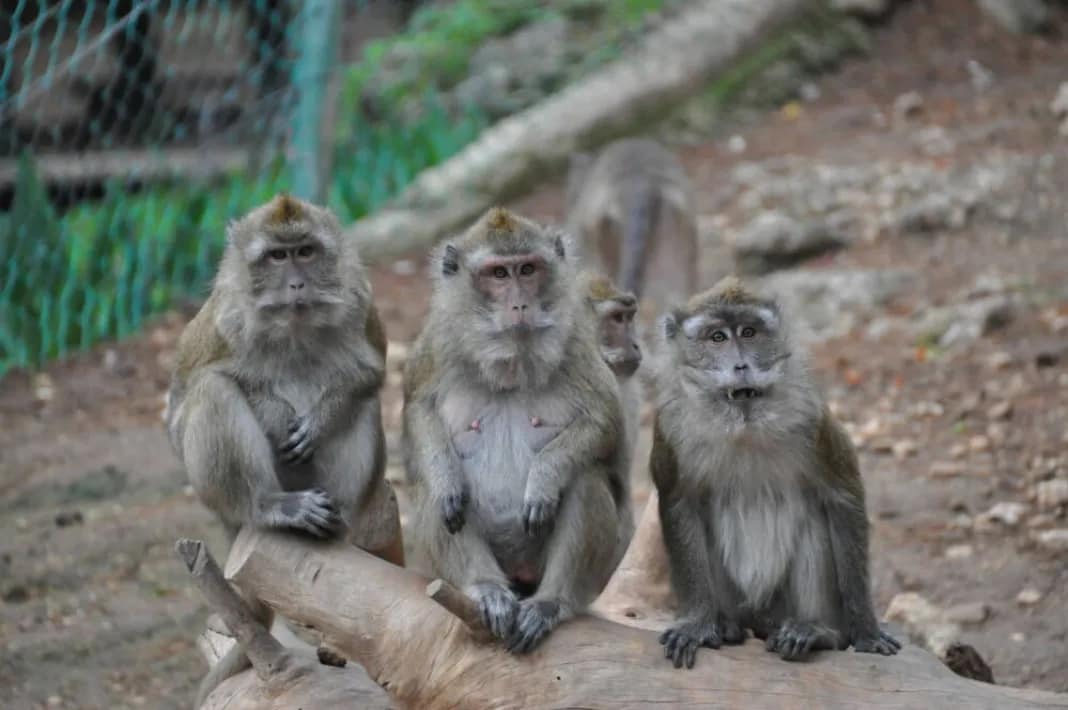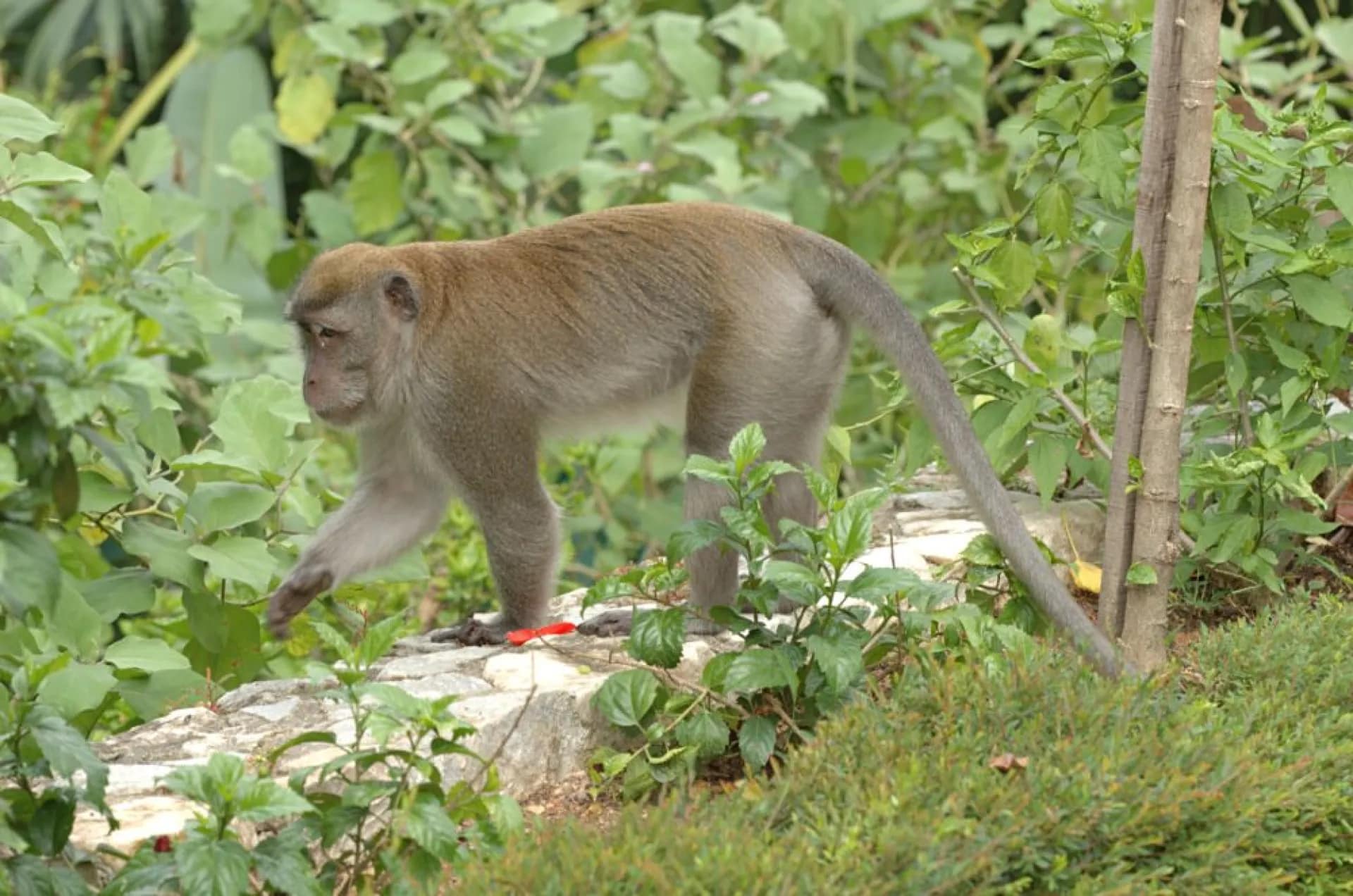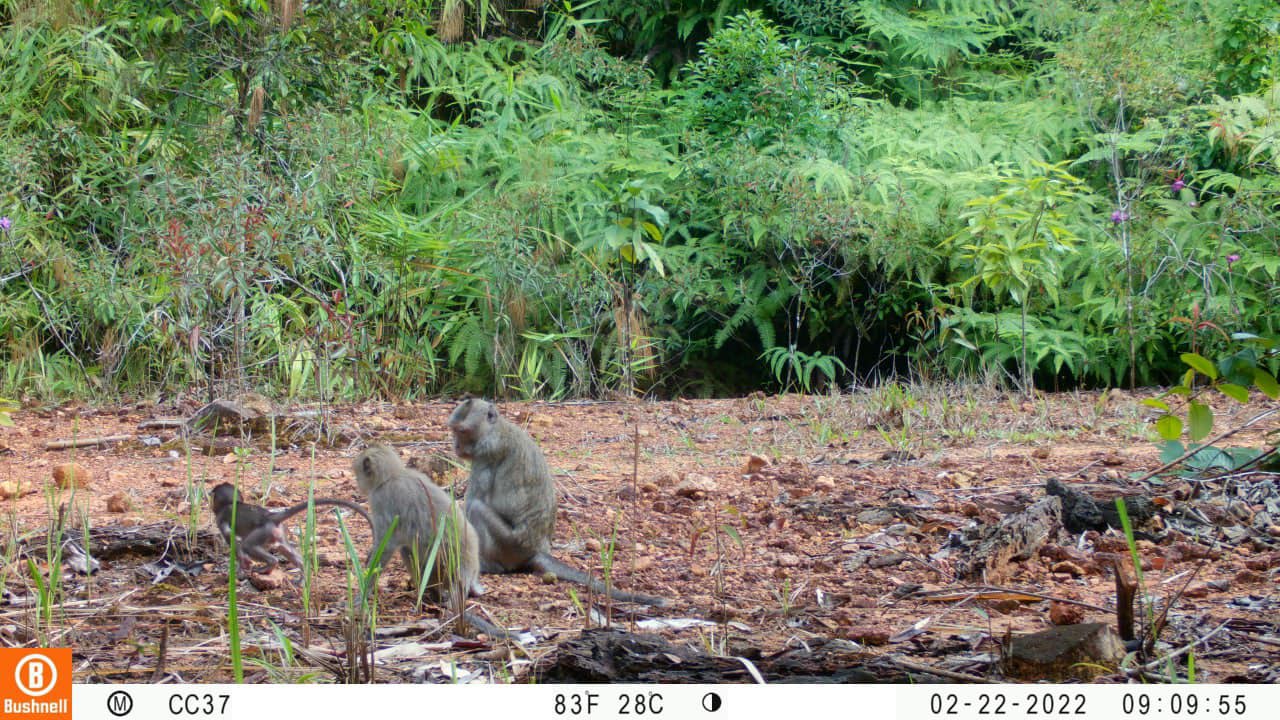






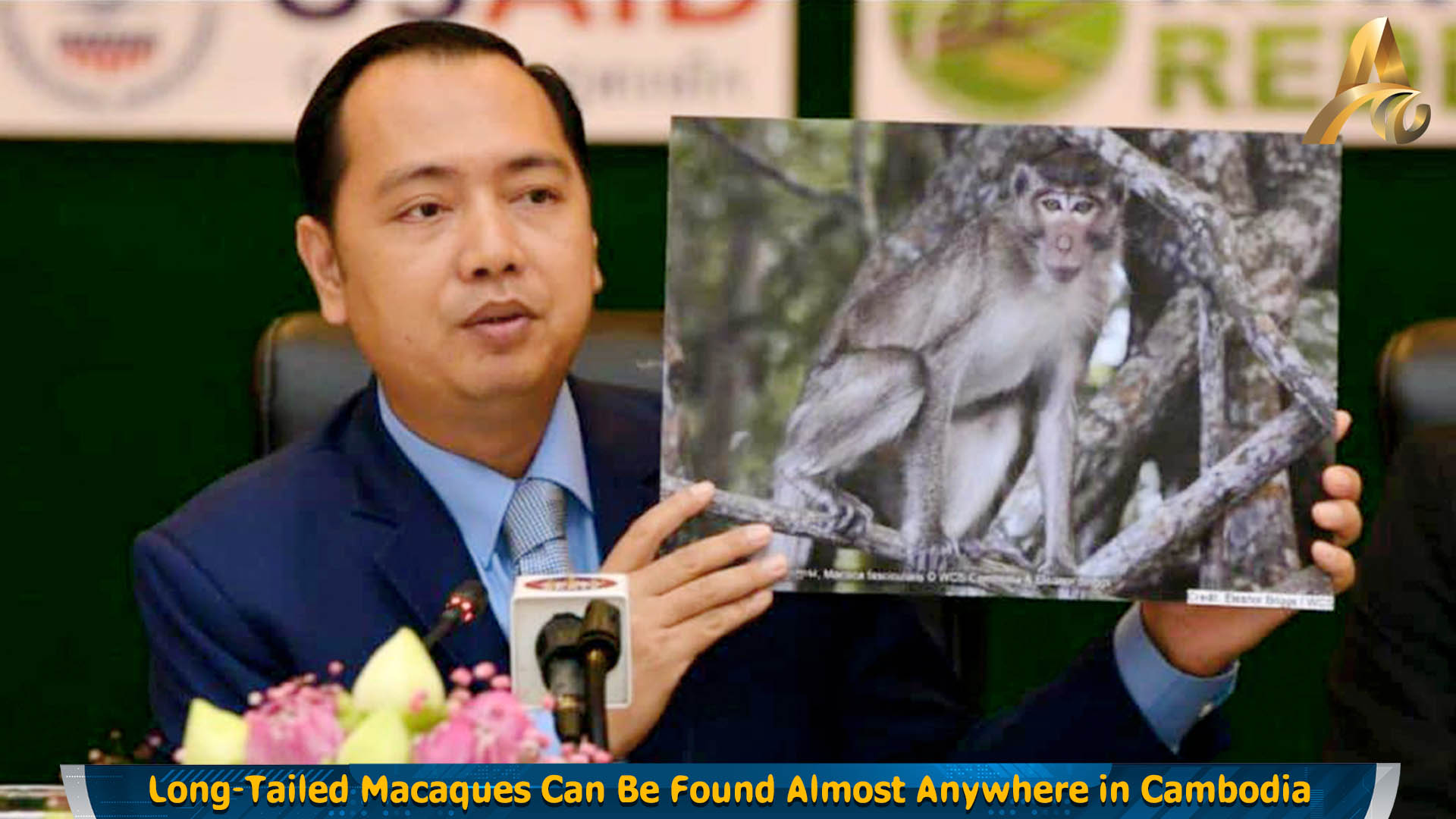








PHNOM PENH: The Secretary of State and Spokesperson for the Ministry of Environment, Neth Pheaktra, has said that the long-tailed macaque is an animal that exists almost everywhere in Cambodia. It is an animal that likes to live in herds, and there can be up to 100 monkeys per herd.
Spokesperson Neth Pheaktra wrote on his official Facebook page in early December that long-tailed macaques live in almost all types of forests (including dense forests, semi-dense forests, bamboo forests, swamps, flooded forests, mangroves, beaches, islands, and more) across Cambodia.
The food the monkeys eat includes crabs, lobsters, snails, shellfish, oysters, insects, fruits, and leaves. Long-tailed macaques are not afraid of water and can swim. Male long-tailed macaques can swim up to 50 meters.
Long-tailed macaques give birth to only one offspring after 5–6 months of pregnancy.
"Long-tailed macaques are present almost all over Cambodia and other countries in Southeast Asia, including Thailand, Malaysia, the Philippines, and Sumatra," wrote Spokesperson Neth Pheaktra. "Long-tailed macaques are classified in the moderate category. There is no clear data on how many long-tailed macaques exist in the world, and we have not been able to determine this in Cambodia."
According to the Spokesperson, there are two main stages of fur color change for the monkeys: gray mixed with brown and red. The color changes are observed according to their age, sex, and location. The macaques have generally light gray to bright red fur when they live in the wild, whereas those living by the sea have fur that is brighter in color than those which live in other areas.
Long-tailed macaques are 92-109 cm long from head to tail and have the longest tail of any species in Asia. Its offspring are born black. Juvenile monkeys have long hairs on their heads, while older monkeys have long, thick hair growing around their faces and bald foreheads.